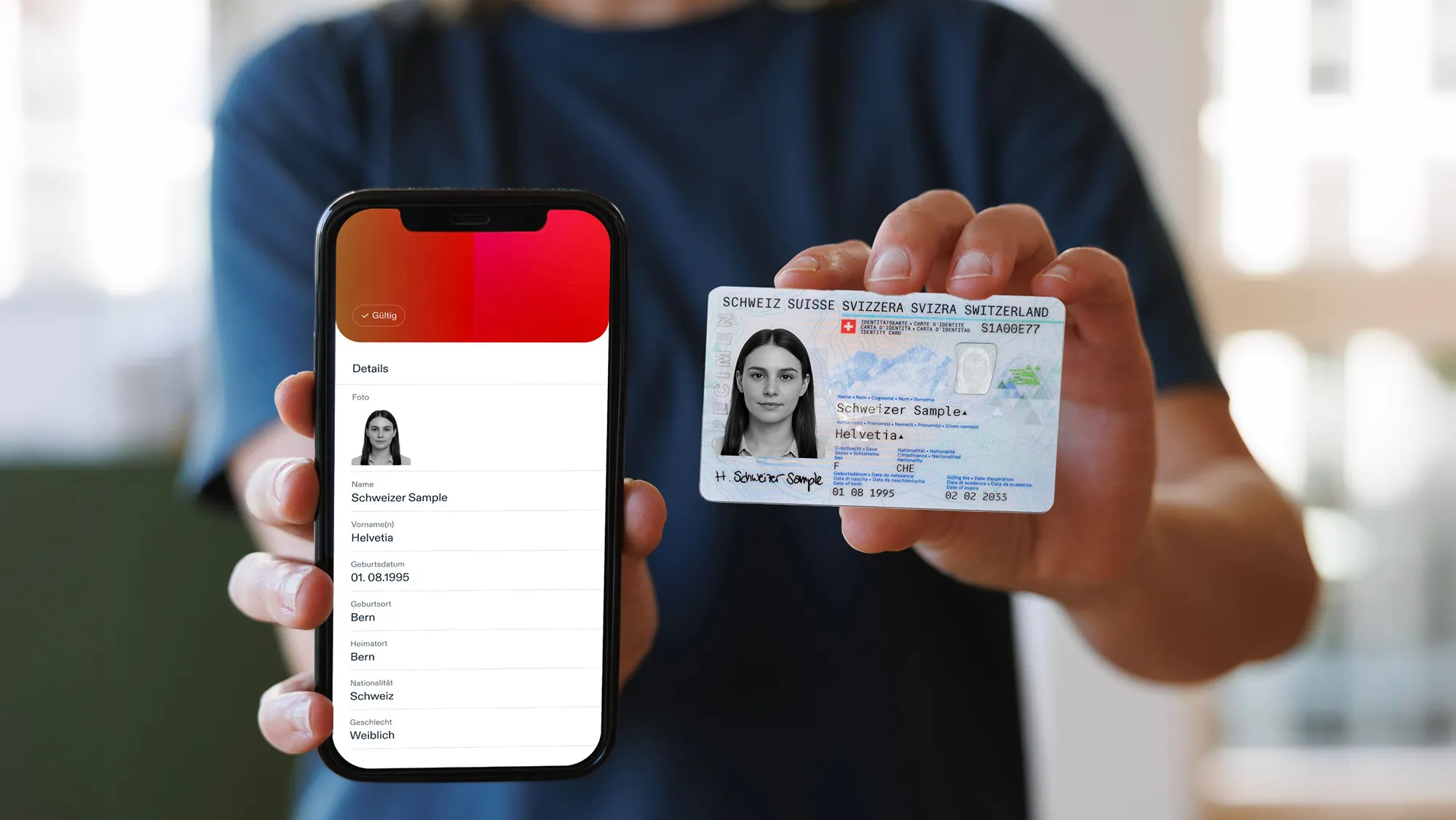
e-ID coming in December 2026
The e-ID is in the starting blocks: despite budget cuts at the federal level, the government has confirmed the planned launch date of December 1, 2026, thus providing planning security. By confirming the date, the federal government has also specified the implementation of the e-ID.
At the same time, the Federal Council is prioritizing the protection of personal data in its work on e-ID, thus responding to the close vote result. Ralf Jenzer, Head of Products at mesoneer AG, welcomes these measures: “The current clarifications clearly show where the journey is headed: data protection and transparency are becoming an integral part of the technical architecture, not just a regulatory framework.”
Data queries will be regulated
In the future, sensitive identifiers such as the AHV number may only be requested by legally authorized providers. Unauthorized requests will be technically blocked. In addition, providers must declare their data queries and their purpose in advance in a publicly accessible federal register. If excessive or unregistered data is requested, a warning will appear in the government wallet. As a last resort, the Federal Office of Justice can exclude offending providers from the e-ID system.
This makes binding a principle that we have been observing for years in digital identification processes: data minimization is no longer just best practice, but a regulatory expectation. For companies, this means:
- Every attribute query must be objectively justifiable.
- Purpose restrictions must be documented and traceable.
- Identification processes must be designed to be auditable.
Transparency becomes part of the customer experience
The new mechanisms make data protection more visible to users. At the same time, warnings in the wallet or publicly viewable registrations change the perception of companies. This has strategic implications: compliance and user experience can no longer be viewed separately. Those who request too much data or do not structure processes cleanly risk losing trust – and, under certain circumstances, regulatory sanctions.
The federal government also confirms that the e-ID will be designed to be technically unlinkable. Several different e-IDs will be issued per person so that individual transactions cannot be linked to each other. This architecture is in line with modern privacy-by-design principles. Processes must be designed to handle unique, non-correlatable identity proofs.
Clean identification processes as a basis
The current adjustments significantly tighten the regulatory guidelines surrounding the e-ID. In particular, transparency requirements, purpose limitation, and the consistent enforcement of data minimization are becoming more binding in operational terms. "The e-ID is clearly developing in the direction of a strictly governance-driven infrastructure. Anyone who wants to integrate it must set up structurally clean identification processes," says Ralf Jenzer.
At mesoneer, e-ID is therefore conceived as an extension of existing identification and signature processes and not as an isolated module. E-ID adds another process that helps to build trust between different parties. At the same time, it is clear that other identification methods are needed in addition to e-ID. “Success depends crucially on the orchestration of the various procedures and their seamless interaction with existing processes, such as electronic signatures, as well as clear and simple user guidance,” says Jenzer.
Frequently asked questions
Integrate e-ID early on
Prepare your identification and onboarding processes for the upcoming e-ID. We will show you how to efficiently implement data protection, transparency, and regulatory requirements with the Digital Trust Platform.


Related Blog Posts